Ceremony · Updated August 23, 2026
Wedding Ceremony Structure Examples
Three planning shapes for different kinds of gatherings.

Start with a useful question
Three planning shapes for different kinds of gatherings. The Fieldbook treats every ceremony choice as one of four things: a requirement to check, a logistical dependency, a personal preference, or a custom that needs context. Keeping those labels visible prevents a checklist from becoming a script for someone else’s life.
Try naming what must be settled soon, what can wait, and who needs a real choice. Then place the answers into the Ceremony Decision Deck, where they become an editable draft rather than a fixed prescription.
Make the handoff explicit
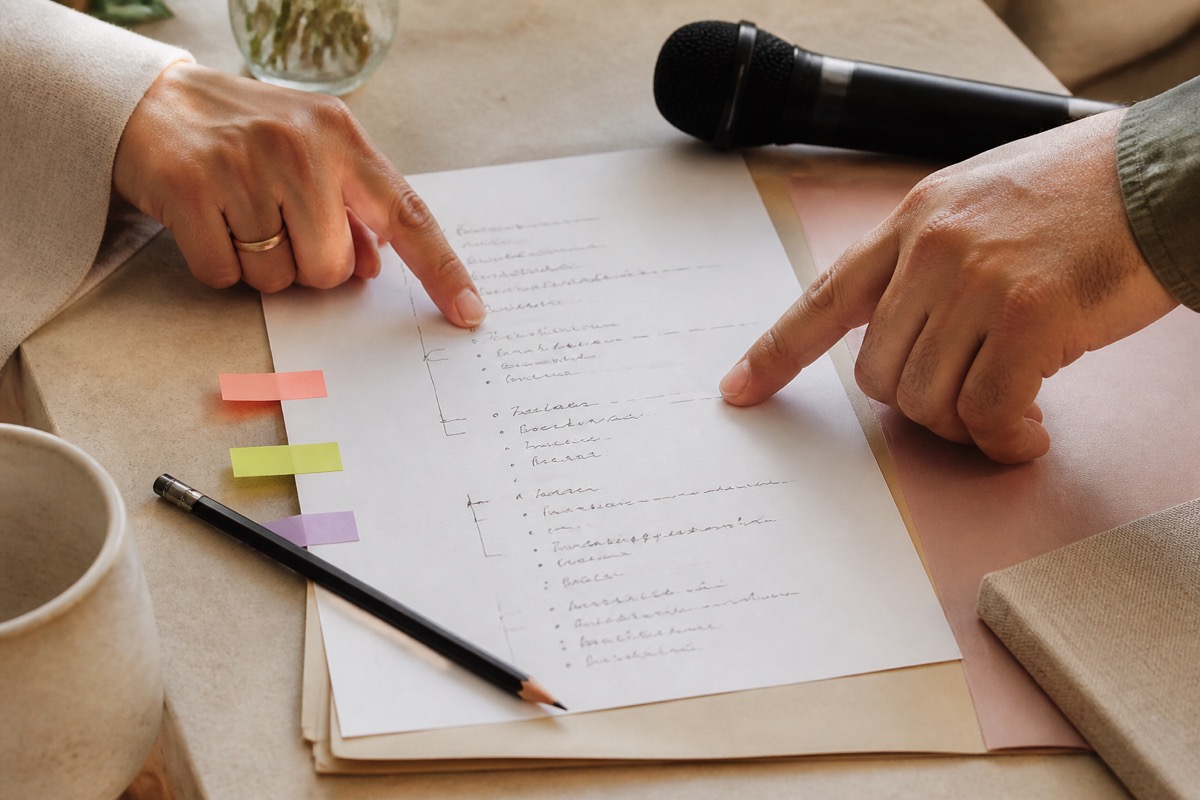
A good ceremony brief gives each beat an owner: the couple, officiant, venue contact, reader, AV lead, or a trusted friend. It also records what needs a rehearsal. This is the core of the ceremony timeline approach and the handoff checklist.
From the desk
What follows the ceremony
Every structure example leaves room for what comes after the exit. A first dance your guests can follow starts with the tempo, not the song.
Structure also decides what the room sings, and a service that borrows a church building borrows its music with it: a ceremony built around a hymn covers the choice and the rehearsal.
Next move
Put this into a rehearsal-ready brief.
The Decision Deck stores nothing by default. It turns the questions above into a local checklist, sequence, and vendor prompts.
Keep planning
Ceremony
Nontraditional Wedding Ceremony Ideas
A ceremony is a sequence you can make your own.Ceremony
Wedding Ceremony Script Guide
Write a ceremony script from beats, not borrowed language.
Ceremony
Interfaith Wedding Ceremony Planning
Build an interfaith ceremony by asking better questions.
Ceremony