Logistics · Updated August 23, 2026
Teen Helpers in a Wedding Ceremony
Give the teenagers in the room a job with a start, an owner, and a way to step back.
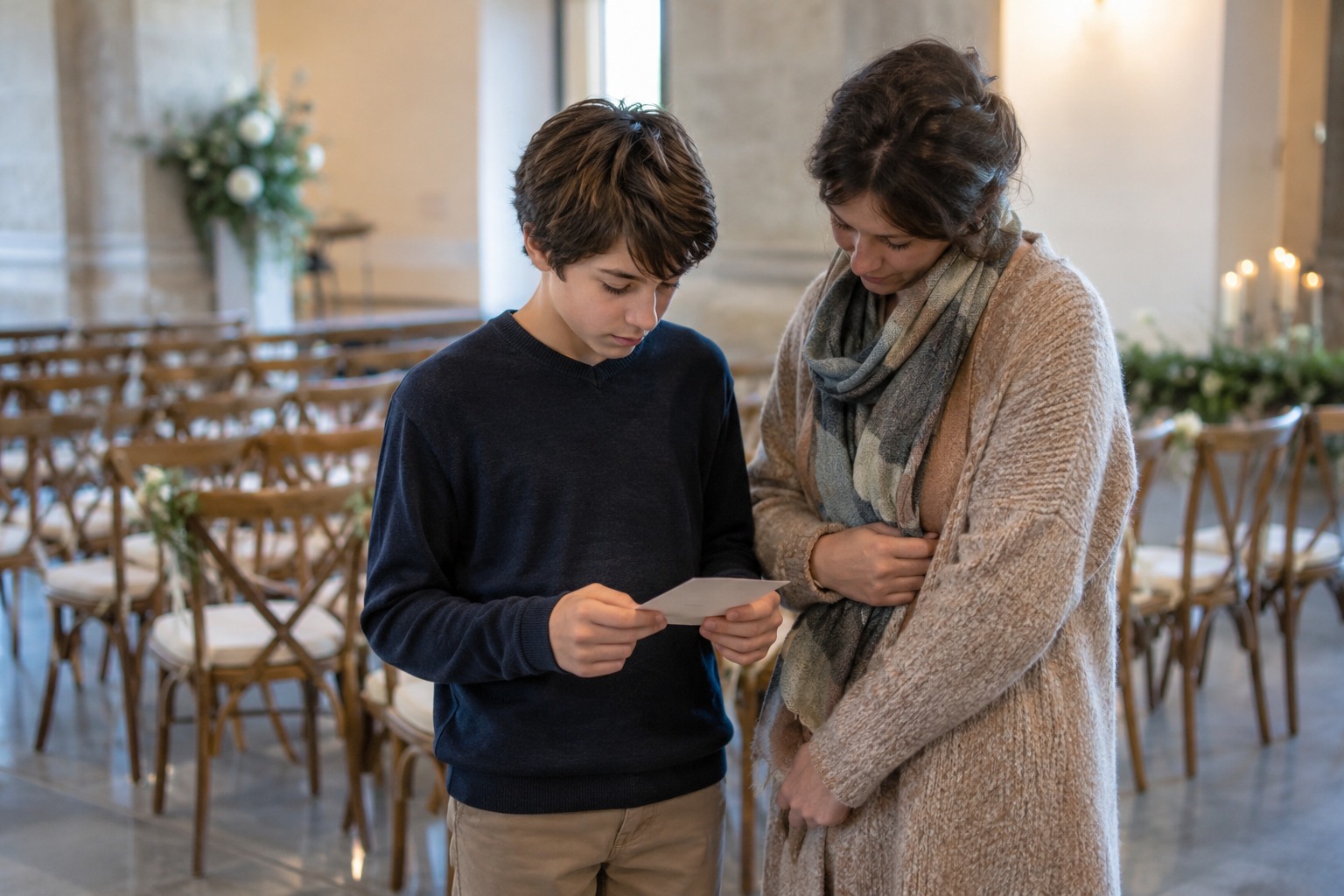
Who in the room can hold a cue?
A teenager can hold any ceremony job that has a start, a finish and one owner, and the volunteers who run youth ministry in small churches already work that way. The Fellowship Hall is a practical magazine for those teams, and its pages on youth ministry volunteers cover group evenings, small-group study, and the training of student leaders.
The same test applies to an adult. A role with no owner, no fallback and no rehearsal is a wish rather than a job, and it is how a nervous reader ends up standing in silence while someone searches for a microphone. Saying the cue out loud, once, in the room, is most of the work.
Age changes the shape of the job more than the size of it. A thirteen-year-old can carry a candle or open a door, and a seventeen-year-old can read the passage and cue the music. What does not change is the need for one adult who answers questions on the day, and one line in the run sheet that records who that is.
How do you prepare a young helper without overloading them?
Prepare the job, not the person. Walk the route once in the room where it happens, say the cue out loud, and agree on the signal that starts it. Two short rehearsals in the weeks before the day work better than one long session the night before, and the paper-first method in a rehearsal without a wedding party applies here: write the handoffs down before anyone walks them.
Give the young helper an exit as well as an entrance. They should know who takes over if the reading does not arrive, if the room is warmer than expected, or if nerves win on the day. A fallback is not a demotion. It is what makes the offer safe to accept, and it is the reason a teenager can say yes without bracing for a failure.
A parent or guardian belongs in the conversation before the role is confirmed, and so does the person who owns the fallback. Their name goes in the brief next to the cue. None of this needs a meeting. One short conversation and one printed card will do it.
What does a young helper need from the run sheet?
Teenagers read a run sheet the way anyone else does: they look for their own name. Print the page with the young helper's cue marked and keep the full schedule with the adults. Add the lines that decide whether the job is comfortable rather than the lines that describe the ceremony, which means where to sit before the cue, how long the standing part lasts, what happens to the reading card afterwards, and who holds the microphone between one beat and the next.
A short job done well is worth more than a long one done anxiously. If the ceremony has three young helpers and one of them asks for a smaller part, the run sheet absorbs that without a rewrite. Assign the cue, name the owner, and leave the rest of the day to the adults.
What does the young helper read?
Choose a passage that can be understood on one hearing. Two or three short paragraphs, with the sentences kept plain and the names easy to say, will carry further than a page of long clauses. Read it aloud yourself first, at the pace you would want, and count the seconds. Anything past ninety seconds is asking a young reader to hold the room rather than to take a turn in it.
If the passage comes from a text the family cares about, say where it comes from and who chose it. That line belongs on the printed card as well, so the reader can introduce it without improvising, and so the room knows why it is being read.
Source check · reviewed September 15, 2026
Youth participation has a structure, and it is written down
Youth participation works when adults organize it: a named supervisor, a defined task, a time limit, and a way to step back. Youth.gov, the federal interagency site on youth programs, collects that guidance for the organizations that run them, and the same structure holds for a ceremony that asks a teenager to carry one cue.
This page offers planning prompts for a ceremony, not individualized advice about any particular young person.
Next move
Put this into a rehearsal-ready brief.
The Decision Deck stores nothing by default. It turns the questions above into a local checklist, sequence, and vendor prompts.
Keep planning

Logistics
Wedding Ceremony Timeline
A workable run sheet is more useful than a perfect-looking plan.Logistics
Wedding Ceremony Budget Guide
Budget the ceremony by decisions and dependencies.Logistics
Wedding Ceremony Checklist
A ceremony checklist organized by owner and handoff.
Logistics