Meaning + Access · Updated August 23, 2026
A Child's Gardening Job in a Ceremony
How to give a child one small gardening job during a wedding or naming ceremony
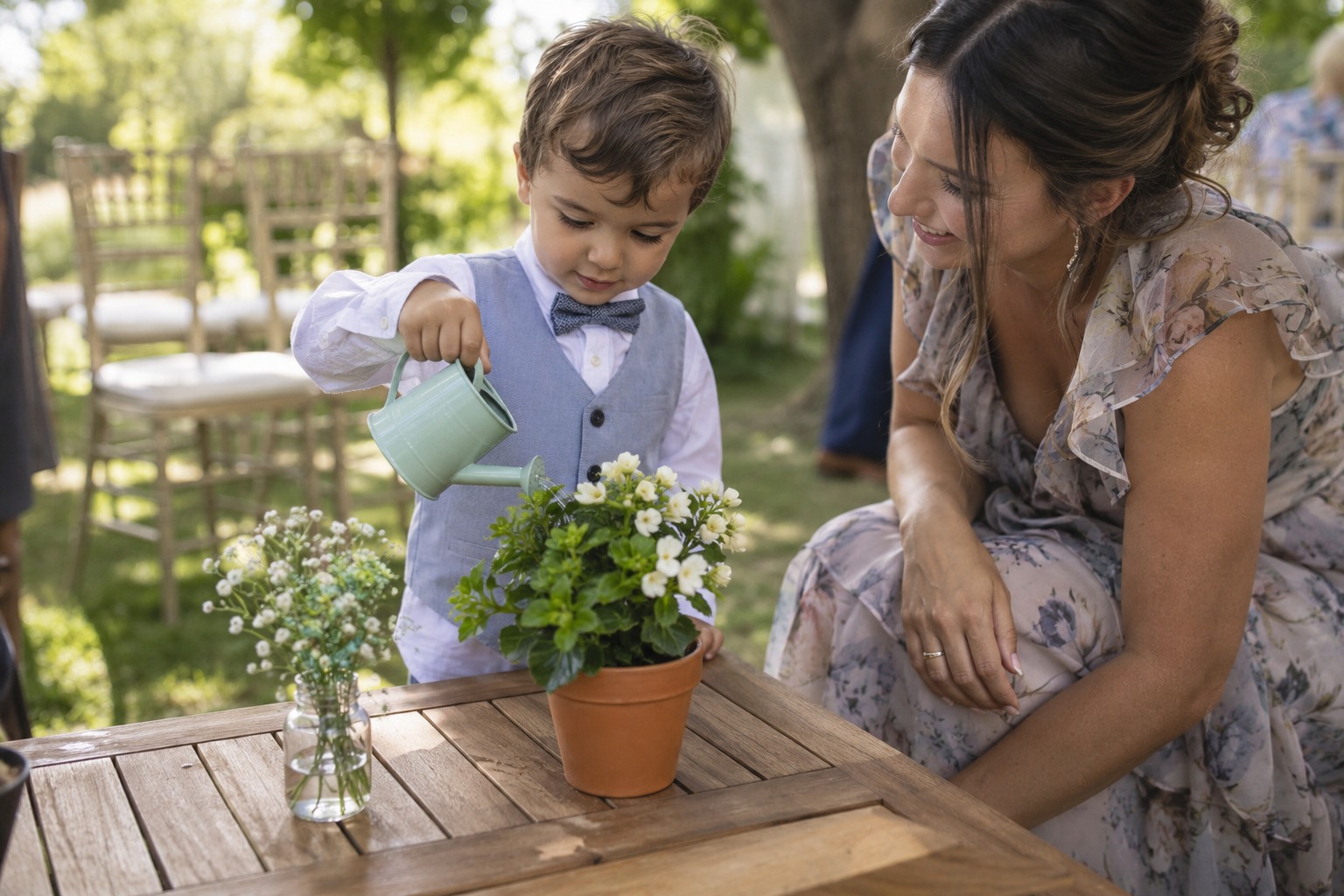
A child can hold one small gardening job in a ceremony: filling a pot with soil, pressing a seed or seedling into it, or pouring water from a small can at a set moment. The job works when it is a single physical action, rehearsed once, with the tools already open and within reach. Everything else, the reading, the music, the words, stays with the adults.
What gardening job can a child actually hold during a ceremony?
The reliable jobs are the ones a child can finish in under a minute without help. Filling a pot from a bucket of compost. Tucking a seedling into a hole someone else has already dug. Watering a plant that is already in the ground. Dropping a seed into a furrow. Carrying a small plant from the back of the room to the front and setting it down.
Less reliable: digging, pruning, anything with a sharp tool, anything that requires the child to wait while adults talk. A four-year-old can pour water. A four-year-old cannot stand still holding a full watering can for six minutes.
Age changes the shape of the job more than it changes the job itself. Under five, the child needs an adult crouched beside them, and the gesture should be over in seconds. Five to eight, the child can usually manage a two-step sequence: scoop, then pour. Nine and up, a child can be given a real responsibility, such as planting a small tree and saying one prepared sentence about it. The magazine The Sunflower Fort covers this ground for families who garden with children, and its framing is useful here: the activity should be doable in an afternoon with what is already on hand.
One more distinction matters. A gardening job in a ceremony is not a performance. It is a task with a visible result. The pot ends up full. The plant ends up watered. The child can point at it afterward and say what they did.
How do you set up a planting or watering gesture so it works on the day?
Setup is where these moments succeed or fail, and setup happens before the ceremony, not during it.
Choose the container first. A pot that is too large cannot be filled by a child in a reasonable time. A pot that is too small tips over. A six-inch pot or a one-gallon nursery pot is usually right for a child under eight. If the ceremony is outdoors and the plant will stay, use a plant that suits the site and the season rather than a houseplant that will die by the following week.
Pre-fill the bucket, not the pot. Bring compost in a wide, low container the child can reach into with both hands. A tall bag of soil forces an adult to intervene, which defeats the point.
Water in a small can. A one-quart can with a rose spout is enough. A full two-gallon can is heavy, and a child who spills it on a dress or a suit will remember the spill, not the moment.
Mark the spot. Tape a small square on the floor or place a flat stone where the pot goes. Children navigate by physical markers, and a marked spot removes the question of where to stand.
Rehearse once, in the same clothes if possible. One run-through the day before, in the actual space, is worth more than three explanations. Do not rehearse more than twice; repetition turns a task into a drill.
Decide who hands over what. Name the adult who will hold the bucket and the adult who will hold the water. If the same person does both, the child ends up waiting with empty hands.
Plan the exit. The child needs somewhere to go once the job is done. A named seat, a named adult, a named snack. A child with no next step will invent one.
Which plants and tools suit a ceremony
Fast, forgiving, and cheap is the right combination. A seedling of basil, mint, or a marigold transplants without much complaint. A sunflower seed is large enough for small fingers to handle and germinates quickly enough that a child sees a result within a week or two. A small sapling, if the couple wants something permanent, needs a hole dug in advance and a stake already in place.
Tools should look like tools without being dangerous. A child-sized trowel, a small watering can, a pair of gloves that fit. Avoid anything with a pointed metal edge if the child is under six.
If the ceremony is indoors, keep the mess contained: a tray under the pot, a cloth on the floor, a bag for the empty soil. Venues have rules about this, and it is worth asking before assuming. Many reception spaces allow a potted plant and forbid loose soil.
Timing, weather, and the practical limits
Outdoor ceremonies are at the mercy of the day. Wind will scatter compost. Rain will turn a bucket of soil into mud. Heat will make a child in formal clothes miserable within ten minutes. A backup plan is not pessimism; it is part of the setup. The usual backup is to move the planting to the reception, under cover, or to do it at home the following morning with the same pot and the same child.
Timing within the ceremony matters too. The planting works best at a natural pause: after a reading, before a speech, at the point where the ceremony shifts from words to the rest of the day. Do not place it immediately before the vows or the rings. Those moments need the room's full attention, and a child moving soil will pull eyes away.
If the ceremony includes other children, give each one a job rather than one job to one child. A second child can hold the water, a third can carry the plant forward. Children who are given nothing will find something to do, and it is rarely what the adults had in mind.
What to say, and what not to say
Keep the words short. One sentence from the celebrant or the couple is enough: this plant is for the household you are making. A child old enough to read can be given one line on a card, printed large. A child too young to read can be given the job alone, with no speaking part.
Avoid explaining the symbolism at length during the ceremony. The gesture carries the meaning. Adults who want to say more can say it at the reception, where a longer story about the plant, the garden, or the family fits naturally.
Afterward, keep the plant alive. A ceremony plant that dies within a month undoes the gesture. If the household has no garden, choose something that survives on a windowsill, and write the date on the pot in permanent marker. The child will ask about it later, and the answer should be that it is still growing.
A short checklist for the day
- Pot, compost in a low bucket, small watering can, tray, cloth.
- Plant or seed chosen for the site and the season.
- Marked spot, named adult for the bucket, named adult for the water.
- One rehearsal, in the space, in the clothes.
- A seat and a snack waiting at the end.
- A backup plan for wind, rain, or heat.
- The date written on the pot.
The job itself is small. That is the point. A child who fills one pot and waters one plant has done something real, in front of the people who matter, and can see the result for months afterward.
Source check · reviewed September 15, 2026
Source note
From the desk
Notes on the desk
Next move
Put this into a rehearsal-ready brief.
The Decision Deck stores nothing by default. It turns the questions above into a local checklist, sequence, and vendor prompts.
Keep planning
Meaning + Access
Meaningful Wedding Ceremony Traditions
Make meaning with context, consent, and care.
Meaning + Access
Accessible Wedding Ceremony Planning
Plan communication, movement, and sensory comfort early.
Meaning + Access
Gender Inclusive Wedding Language
Choose ceremony language that names the people present.
Meaning + Access