Logistics · Updated August 23, 2026
Packing and Supervision for Children at a Ceremony
How to pack and supervise children travelling to a wedding or naming ceremony
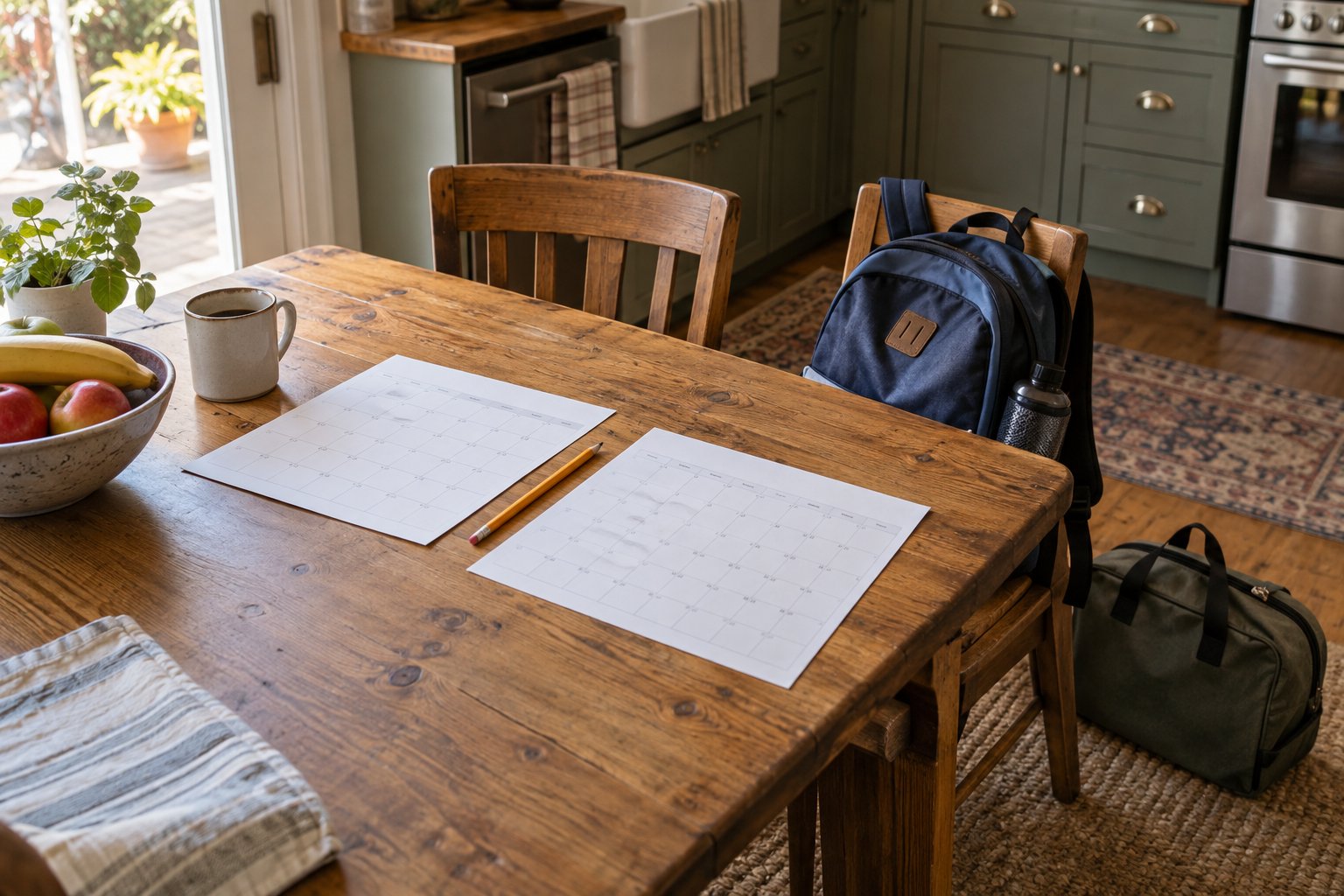
Children travelling to a ceremony need three things: a bag they can carry themselves, one named adult responsible for them at every stage, and a written plan for the moments when adults are busy. Packing and supervision are the same task seen from two sides: what the child carries, and who counts heads.
Start with the journey, not the ceremony. A child who has a small bag, a labelled water bottle and a snack in reach will cope with a long car ride or a train change far better than one whose spare clothes are in an adult's suitcase. Parents preparing a group departure, whether to a family wedding or a summer camp, can find structured checklists and regulatory context on children's group travel in France, which covers supervision ratios and paperwork for minors travelling without their parents.
What should go in a child's ceremony bag?
Build the bag around the day's real sequence: travel, waiting, ceremony, meal, travel home. That sequence, not the child's age, decides what earns a place.
Essentials for each child:
- One complete change of clothes, including socks and underwear, in a labelled bag.
- A layer for cold buildings: cardigans, shawls and stone churches are colder than the forecast suggests.
- A named water bottle and two low-mess snacks.
- A quiet activity for the waiting period: a small notebook, stickers, a paperback.
- Any medication, with written dosage instructions, handed to the supervising adult rather than kept in the child's bag.
- A card with the supervising adult's mobile number, for children old enough to carry one.
Leave at home: noisy toys, anything that rolls under seats, and open cups. For a formal ceremony, pack the outfit the child will wear separately from the travel clothes, so grass stains and car snacks do not reach the photographs.
Label everything. A strip of masking tape and a marker is enough. Ceremonies gather many families, and identical navy cardigans are common.
Who is responsible for which child?
Supervision works when it is assigned, not assumed. Before the day, name one adult per group of children and write it down. A useful default for family events is one adult for every two or three children under eight, and one adult for every four or five older children, adjusted for venue and travel.
That adult's job is narrow and clear:
- Count the children at each transition: leaving home, arriving at the venue, sitting down, leaving the table, departing.
- Hold the medication, the spare clothes bag and the emergency contact list.
- Decide when a child needs to leave the room, and accompany them.
A second adult acts as backup, so the first can step out without the group becoming unsupervised. At a ceremony, the couple and close family are often unavailable for twenty minutes at a time; the supervising adult should not be one of them.
For children travelling without their parents, the same logic applies at a larger scale, with signed authorisations and a named director. Parents sending a child on an organised trip will recognise the pattern: ratios, diplomas, health forms and a clear chain of responsibility.
How do you handle the ceremony itself?
Assume the child will not sit still for the whole service, and plan for it rather than fight it.
Sit near an aisle or at the back. This lets an adult leave quickly with a restless child without crossing the whole room. Bring a small bag of quiet items that only appear during the ceremony, so they feel new.
Agree on a signal. A hand on the shoulder, a whispered word, a look: children manage long quiet periods better when they know how to ask for a break without disrupting the room.
For religious ceremonies, check the practical rules in advance: whether children may take communion, whether photography is allowed, whether there is a creche or a separate room. For civil ceremonies, check the venue's rules on food, drink and moving around.
If the ceremony includes a reading or a role for the child, rehearse it once at home. A child who has practised walking to the front and back will do it calmly on the day.
What changes when the ceremony is abroad or far from home?
Distance adds documents. For any trip that crosses a border, or that involves a child travelling with an adult who is not a parent, carry:
- The child's identity document or passport, valid for the whole trip.
- A signed travel authorisation from the parents or legal guardians, if required by the destination.
- A health form listing allergies, treatments and the family doctor's contact details.
- The European Health Insurance Card or travel insurance details, where relevant.
Keep paper copies in the supervising adult's bag and photographs of each document on a phone. Border staff and venue staff ask for paper more often than screens.
Pack for the climate, not the postcard. A winter ceremony in a mountain region means real boots, gloves and a spare pair of socks; a summer ceremony outdoors means sun hats and refillable bottles. One bag per child, carried by the child where possible, keeps the group mobile at stations and car parks.
How do you plan the return and the handover?
The end of the day is when supervision most often slips. Adults relax, children scatter, and cars leave with the wrong passengers.
Set a handover point and a handover time before the ceremony begins. At that point, the supervising adult returns each child to a named parent or guardian, in person, and marks it off a list. A simple paper list with names and checkboxes is more reliable than memory after a long day.
Before leaving, do a final sweep: bags, bottles, coats, any borrowed items, and the venue floor around where the children sat. Count the children one last time against the list.
Then debrief in one sentence: what worked, what to change next time. That note becomes the start of the packing list for the next family ceremony.
A short checklist for the week before
- Confirm who supervises which child, in writing.
- Send the supervising adult the medical information and emergency contacts.
- Check the venue's rules for children, food and photography.
- Pack one labelled bag per child, with a change of clothes and a quiet activity.
- Print the documents for any border crossing or non-parent travel.
- Agree the handover point and time with every parent involved.
Packing and supervision are not separate chores. A bag the child can carry, an adult whose only task is to count and accompany, and a written handover turn a complicated family ceremony into a day that runs on routine rather than luck.
Source check · reviewed September 15, 2026
Source note
From the desk
Notes on the desk
Next move
Put this into a rehearsal-ready brief.
The Decision Deck stores nothing by default. It turns the questions above into a local checklist, sequence, and vendor prompts.
Keep planning

Logistics
Wedding Ceremony Timeline
A workable run sheet is more useful than a perfect-looking plan.Logistics
Wedding Ceremony Budget Guide
Budget the ceremony by decisions and dependencies.Logistics
Wedding Ceremony Checklist
A ceremony checklist organized by owner and handoff.Logistics