Ceremony · Updated August 23, 2026
Handmade Elements in a Ceremony
How to use handmade elements in a wedding ceremony: readings, rings, vows and favors
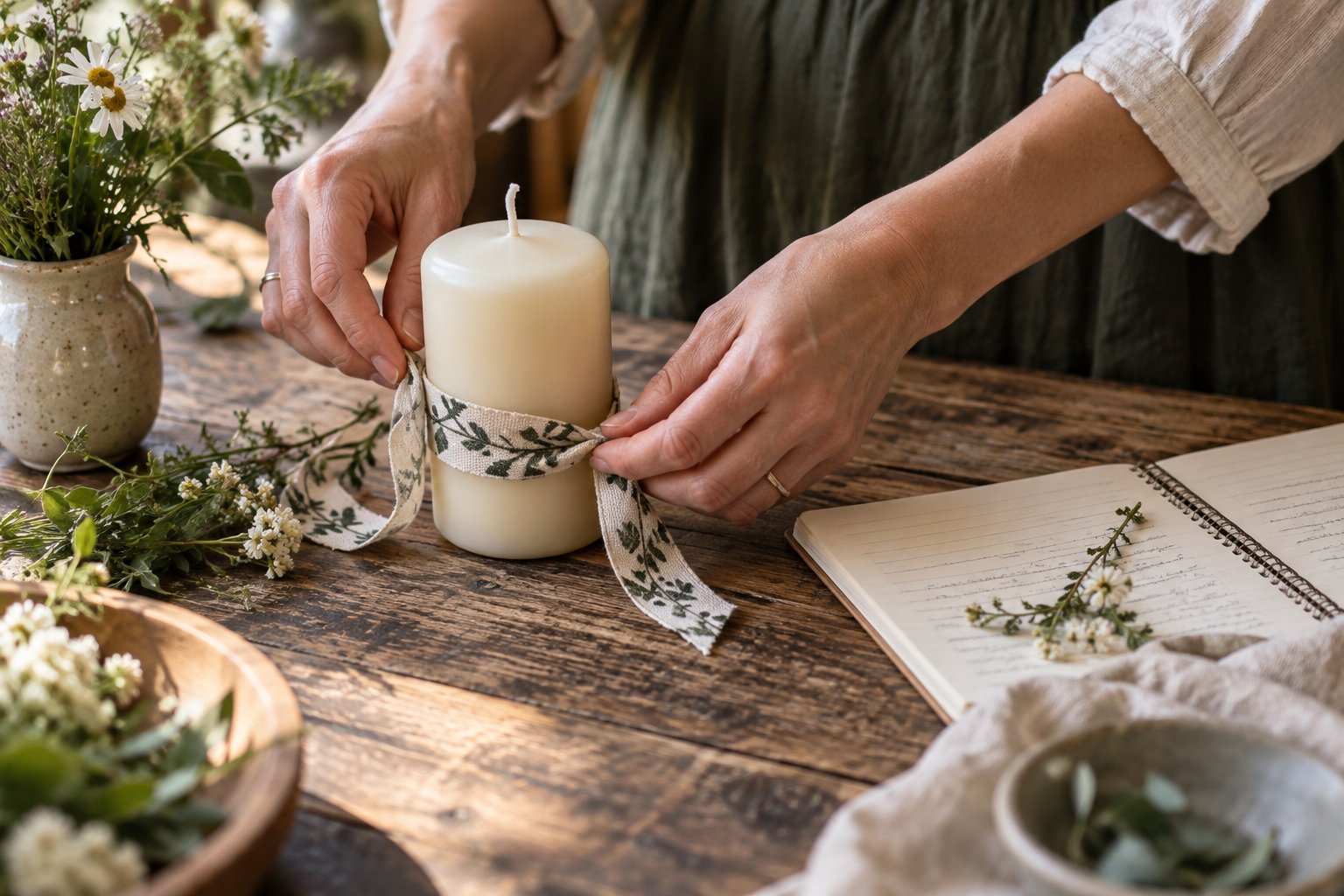
Handmade elements work in a ceremony when they carry a job rather than only a look. Choose one or two moments where a made object does something: holds the rings, carries a reading, wraps a handfasting cord, or goes home with a guest. Then write that object into the script so the person handling it knows when to stand, what to say and where to go next.
What counts as a handmade element in a ceremony?
A handmade element is any object or action in the ceremony that a participant made, finished or assembled rather than bought ready-made. The category is wider than most couples assume. It includes the ring bearer's cushion sewn from a grandmother's fabric, a printed reading card with hand-lettered names, a quilted chuppah canopy, a knitted wrap for a winter vow exchange, a hand-tied bouquet, a wooden box for letters, and the favors left at each place setting.
The test is not craft skill. It is whether the object has a function in the ceremony itself. A knitted blanket folded on a chair is decoration. The same blanket wrapped around the couple's shoulders during an outdoor vow exchange is an element, because it changes how the moment is staged and photographed.
For couples who want a textile in the ceremony, the practical questions are weight, fiber and gauge, because a lace-weight shawl behaves differently from a bulky wool wrap in wind or rain. A teaching resource such as the skein almanac explains how yarn weight, fiber content and gauge on the label affect drape and warmth, which is the same information a couple needs when choosing a wrap, a ring cushion cover or a small knitted gift for the officiant.
Which moments in the ceremony can carry a made object?
Most ceremonies have five natural slots. Each one can hold a handmade item without adding time to the run sheet.
Processional and entrance. A hand-tied bouquet, a knitted or crocheted wrap, a beaded hairpiece, a quilted banner carried by a child. These are seen before anything is said, so they set the visual tone.
Readings and poems. A hand-lettered card, a bound booklet of readings, a bookmark marking the page. If the reading is bilingual, a printed card with both languages lets the reader move between them without losing the thread.
Rings and vows. A ring cushion, a ring box turned from a fallen branch, a vow booklet with handwritten pages. The object is handled at the most photographed moment of the ceremony, so it needs to be stable in the hand and easy to open one-handed.
Unity or binding rituals. Handfasting cords braided by friends, a sand vessel painted by a sibling, a quilt square signed by guests, a tree sapling in a decorated pot. These rituals depend on the object being ready before the ceremony starts, not assembled on the spot.
Recessional and favors. Small knitted ornaments, seed packets with hand-stamped labels, jars of preserves, printed recipe cards. Favors are the most common handmade element and the easiest to overdo, because the count is set by the guest list.
How do you write a handmade element into the script?
Give every made object a line in the script, even if the line is only a stage direction. The officiant's copy should say who carries it, when they stand, where they place it and what happens if they are late.
A workable format for each element is four lines: the cue (music change, sentence, gesture), the person, the action, and the handoff. For example: cue, the second reading begins; person, the bride's brother; action, he steps forward with the bound booklet, opens it to the marked page and reads; handoff, he returns to the second row and keeps the booklet.
Two rules prevent most problems. First, never ask a guest to improvise a craft task during the ceremony. Second, never let a handmade object arrive on the day without a rehearsal. A ring cushion that has never held a ring may not hold one under pressure, and a handfasting cord that has never been tied takes longer than the script allows.
If the object is fragile, plan a substitute. A ceramic ring dish can crack in a cold church; a paper vow booklet can wilt in humid outdoor air. Keep a plain backup in the officiant's folder and decide in advance who will swap it.
What should you check before the day?
Run a materials check the week before, not the morning of. Lay every handmade element on a table with its script line beside it and confirm five things.
Weather. Wool, paper, fresh flowers and unsealed wood all react to rain, wind and heat. An outdoor ceremony in a coastal garden needs weights for light fabrics and a covered box for paper goods.
Handling. Can the person carry it while walking, standing and holding a microphone? Test this with the actual person, not a stand-in.
Timing. A handmade element that adds a speech, a song or a group action adds minutes. Put the real duration in the run sheet and cut something else if the ceremony has a hard limit.
Sound and sight. A small object at the front of a large room may be invisible to guests. If the element matters to the story, mention it in the officiant's welcome so people know what they are looking at.
Keepsake plan. Decide who takes each object home and how it will be stored. Textiles should be clean and dry before storage; paper should be flat and away from light.
Can handmade favors and gifts stay practical?
Yes, if the count and the budget are set before the making begins. The common failure is a couple who decide on knitted favors for 120 guests in the final month.
Work backward from the guest list. If the favor takes twenty minutes each, 120 favors is forty hours of making, which is a second job. Reduce the number, simplify the object, or recruit a group and treat it as a shared project with a fixed deadline.
For children at the ceremony, a small handmade activity works better than a favor: a paper puzzle, a coloring card with the couple's names, a simple braided bracelet. Parents and carers notice this, and it keeps the front rows calm during readings.
For the couple's own keepsakes, choose objects that survive handling. A signed quilt square, a bound copy of the vows, a dried bouquet, a wooden box for letters written on the day. Label each one with the date and the names, because memory fades faster than paper.
How do you keep the ceremony from becoming a craft display?
Edit by function. Keep the elements that do a job in the ceremony and move the rest to the reception, where guests can touch them without disrupting the script.
A useful rule is one made object per section: one for the entrance, one for the readings, one for the rings, one for the binding ritual, one for the favors. That gives the ceremony a handmade character without turning it into an exhibition.
Tell the officiant which elements are meaningful and which are only decorative. The officiant can then name the important ones in a sentence, which is often the difference between guests seeing a nice blanket and guests understanding that it was made by the couple's grandmother.
Finally, accept that some elements will not survive the day perfectly. A hem may pull, a card may crease, a flower may drop. The ceremony is a live event, and the objects in it are used, not preserved. Plan for the wear, keep a repair kit with thread, tape and pins, and let the rest go.
For couples building the textile side of the ceremony, from wraps to ring cushions to small gifts, the same principles apply as in any project: choose the fiber for the conditions, check the gauge before committing, and finish the object well before the rehearsal. The ceremony will not wait for a missing seam.
Source check · reviewed September 15, 2026
Source note
From the desk
Notes on the desk
Next move
Put this into a rehearsal-ready brief.
The Decision Deck stores nothing by default. It turns the questions above into a local checklist, sequence, and vendor prompts.
Keep planning
Ceremony
Nontraditional Wedding Ceremony Ideas
A ceremony is a sequence you can make your own.Ceremony
Wedding Ceremony Script Guide
Write a ceremony script from beats, not borrowed language.
Ceremony
Wedding Ceremony Structure Examples
Three planning shapes for different kinds of gatherings.Ceremony